 Post by
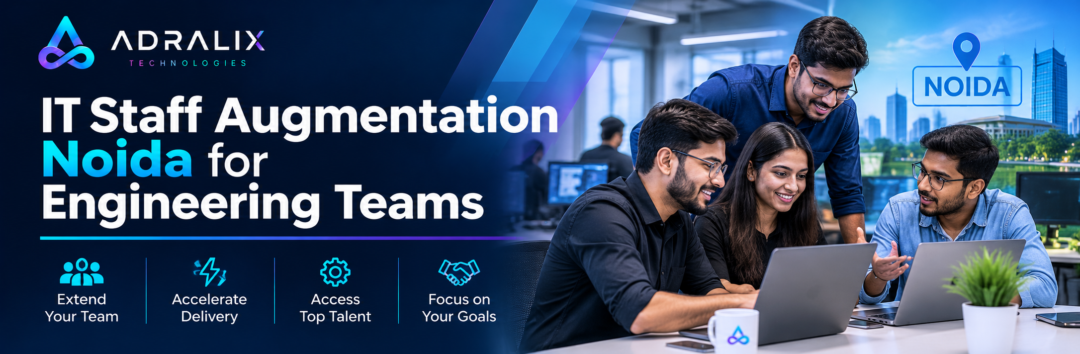
IT Staff Augmentation Noida is a practical option for organisations that need additional engineering capacity but want to retain control of their product roadmap, delivery priorities and internal processes. A business may already have a product manager, architect or in-house development team, yet lack a specialist skill or enough people to complete a time-sensitive release. Augmentation fills that specific capacity gap by extending the existing team.
The model is different from outsourcing an entire project. In staff augmentation, additional professionals work within the client’s delivery structure, follow agreed workflows and collaborate with internal stakeholders. This arrangement can be useful for companies in Noida and the wider NCR technology ecosystem, particularly when hiring needs change with product milestones.
Quick Answer
IT staff augmentation allows a business to add developers, designers, QA professionals or other specialists to an existing delivery team for a defined requirement. It can help address a skills gap, workload increase or project milestone without making every role a permanent hire. The model works best when responsibilities, reporting, access, delivery expectations and knowledge transfer are agreed before work begins.
Key Facts
- Staff augmentation adds skills to an existing team rather than transferring all delivery ownership.
- Role clarity and technical screening matter more than profile volume.
- The client usually retains product priorities, architecture decisions and acceptance ownership.
- Access controls and onboarding should be planned before a developer joins the project.
- Engagement length should reflect the roadmap and the expected knowledge-transfer process.
Industry Statistic
IBEF reports that India’s IT and BPM industry revenue stood at US$315 billion in FY26, up 6.1% from FY25, and describes a technology and AI ecosystem employing about 6 million people. These national figures are not Noida hiring or salary data.
When Does IT Staff Augmentation Noida Make Sense?
A permanent hire is often suitable when the role is expected to remain central to the business over the long term. Staff augmentation can be more suitable when a company needs a defined skill for a particular phase, a short-term increase in delivery capacity or additional support while an internal recruitment process continues.
Common triggers include:
- A specialist skill gap: The roadmap requires React, Node.js, Python, Flutter, automation QA or another capability that the current team does not have.
- A temporary delivery peak: A release, migration or integration creates additional workload that may reduce after the milestone.
- A delayed recruitment cycle: The project cannot remain idle while the company searches for a permanent employee.
- A need for flexible capacity: The business wants to add or reduce team capacity as priorities and budgets change.
- Independent QA support: A team needs additional testers to improve coverage while developers continue building new functionality.
IBEF reports that India’s IT and BPM industry reached US$315 billion in FY26 revenue and that the technology and AI ecosystem employs about 6 million people. For a defined requirement, IT staff augmentation services Noida can be evaluated against the team’s skill gap, timeline and management capacity. These figures indicate the scale of the national technology sector; they do not establish a local talent availability rate or guarantee that a particular skill will be easy to hire in Noida.
| Engagement Model | Who Manages Day-to-Day Work? | Best Suited To |
|---|---|---|
| Permanent hiring | Client organisation | Long-term roles central to the business |
| IT staff augmentation | Client team directs the added professional | Filling defined skills or capacity gaps |
| Project outsourcing | Provider manages agreed delivery scope | Work with defined outcomes and deliverables |
| Managed product delivery | Provider manages a broader delivery process | Teams seeking external execution ownership |
Which Roles Can Be Added to an Existing Team?
The role should be selected according to the current bottleneck, not simply because a profile is available. A business with a strong frontend team may need backend or API expertise; a product preparing for frequent releases may need QA automation; a mobile product may need platform-specific developers.
Typical roles include:
- Frontend developers: Build and maintain interfaces, reusable components and responsive user experiences.
- Backend developers: Work on application logic, APIs, databases, authentication and integrations.
- Full-stack developers: Contribute across frontend and backend areas where the scope and experience level are suitable.
- Mobile developers: Support Android and iOS development using technologies such as Flutter, React Native, Kotlin or Swift.
- QA engineers: Perform manual testing, regression checks, test planning and automation work.
- UI/UX designers: Help shape user flows, wireframes, interface systems and product usability.
A clear role description should specify the expected technical depth, communication responsibilities, working hours, tools, seniority and outcomes. Avoid selecting a developer only by a framework name. Experience with an adjacent codebase, debugging, code review and team collaboration can be just as important.
How to Evaluate an IT Staff Augmentation Partner?
A structured selection process reduces the risk of adding capacity that does not fit the product or the team. Use the following steps before confirming an engagement:
- Document the gap: Define the feature, backlog, release or operational requirement that the additional professional will support.
- Set role criteria: Specify technologies, experience, domain knowledge, seniority and communication expectations.
- Assess technical fit: Use relevant interviews, work samples or practical discussions based on the actual role rather than generic quizzes.
- Agree on delivery boundaries: Clarify who assigns tasks, approves work, reviews code, manages leave and handles performance concerns.
- Prepare onboarding: Arrange repository access, development environments, documentation, security policies and product walkthroughs.
- Review progress: Use sprint participation, quality of work, responsiveness, issue resolution and knowledge sharing as operating measures.
The client should also define how access is removed when the assignment ends. Repository permissions, credentials, customer data and internal documents need to be managed through the company’s established security process.
Adralix Capabilities for Flexible Team Extension
Adralix Technologies lists IT Staff Augmentation as a service and identifies dedicated developers, frontend specialists, backend engineers, full-stack developers, mobile experts and QA automation testers among the roles it can provide. Its published engagement options include project-based delivery, dedicated development teams and team augmentation. These are service capabilities, not a guarantee of a fixed onboarding time or a specific candidate’s availability.
For businesses evaluating dedicated developers Noida, the first discussion should establish the technology gap, expected responsibilities, duration and how the professional will collaborate with the internal team. The right arrangement should support the client’s delivery model rather than create a parallel process.
Review Adralix IT Staff Augmentation Services and Automation Testing Services for related team capabilities.
Frequently Asked Questions
1. What Is Included in IT Staff Augmentation Noida?
The scope can include developers, designers, QA engineers or other technical professionals who work within the client’s existing team. Role, seniority, duration, responsibilities and reporting arrangements should be agreed before the engagement starts.
2. How Is Engineering Team Extension Different from Outsourcing?
An extended team generally follows the client’s day-to-day priorities and delivery workflow. In outsourcing, the provider usually manages a defined scope and is more directly responsible for completing the agreed deliverables.
3. Can a Business Hire Remote Developers Noida Without Opening a Local Office?
Remote collaboration can work when communication routines, tools, access controls, documentation and overlap hours are clear. The engagement should define how work is reviewed and how blockers are escalated.
4. How Should a Company Measure an Augmented Developer’s Performance?
Assess the quality and maintainability of work, contribution to agreed tasks, collaboration, problem-solving, adherence to engineering practices and ability to share knowledge. Avoid relying only on lines of code or hours logged.
Add Engineering Capacity with a Clear Operating Model
IT Staff Augmentation Noida is most effective when the business knows which capability is missing and how the added professional will contribute. Define the role, test technical fit, prepare onboarding and review outcomes with the internal team. Adralix Technologies offers team augmentation and dedicated engineering capabilities for organisations planning their next delivery phase.